Blog and Resources
Thinking of Solar Shades? What you Need to Know
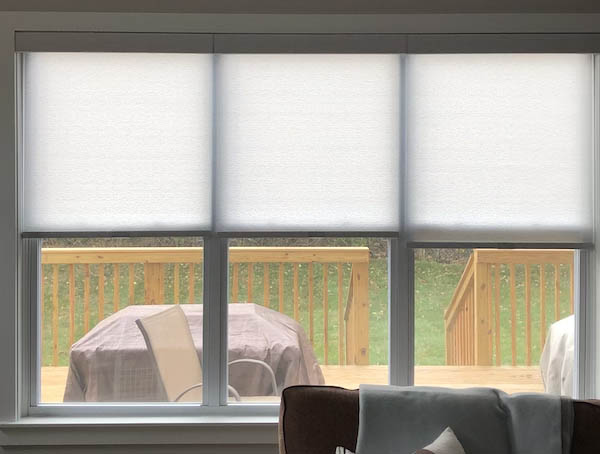
The amount of light a solar shade fabric lets in is recorded in percentages. The higher the number, the greater amount of light gets in. High percentages also allow for a clearer view out the window.
For example, fabrics with a 10% openness provide 90% UV blockage.
Privacy
Solar shades do not offer 100% privacy. Many interior designers pair them with a secondary treatment like drapes or curtains.
Fabrics
Solar screens are made of a range of fabrics, including:
- Vinyl-coated fiberglass yarns
- Vinyl-coated fiberglass and polyester weaves
- Vinyl-coated polyester yarns
All create a screen mesh designed to look and feel like tweed or linen.
Three types of solar shades use fabrics made to go easy on the environment:
- Some shades are made of PET salvaged from the ocean
- Other fabrics are constructed from post-consumer recycled material
- A third eco-fabric is treated to keep out fungi and microbes
Valences and Cassettes
Homeowners with modern decors love the look of solar shades, but in some situations, their minimalistic appeal can feel too understated.
Top treatments, which are decorative boards attached to the top of the window (or door), provide a more finished look. There are four main types:
Contour Valances are slightly rounded, fabric-wrapped valances designed to hide hardware. They may be set with the same or complementary fabric as the shade. Usually mounted separately from the shade.
Cassette Valances are more curved to make it look as if your shade is rolling directly up into the valance.
Flat Valances are wrapped in the same fabric as the shade. They don’t jut out as much as contour or cassette valances.
Fascia are installed with box brackets on the ends with aluminum fronts snapped on. They are the “boxiest” option and come in a clear, anodized or powder-coated finishes for a satiny, contemporary look.
Options
- Solar shades come in a variety of colors, patterns and textures
- Railroad fabrics eliminate seams on large shades
- Continuous loop pulls use a special “clutch” system to keep the shade at a desired height, and a hold-down device to keep the cord tight
- Cordless lifts with or without motorization make operation easy and safe
- Reverse roll options feed the fabric from the front instead of the back
A nearby window shade company can help you select the right solar shade for your needs.